


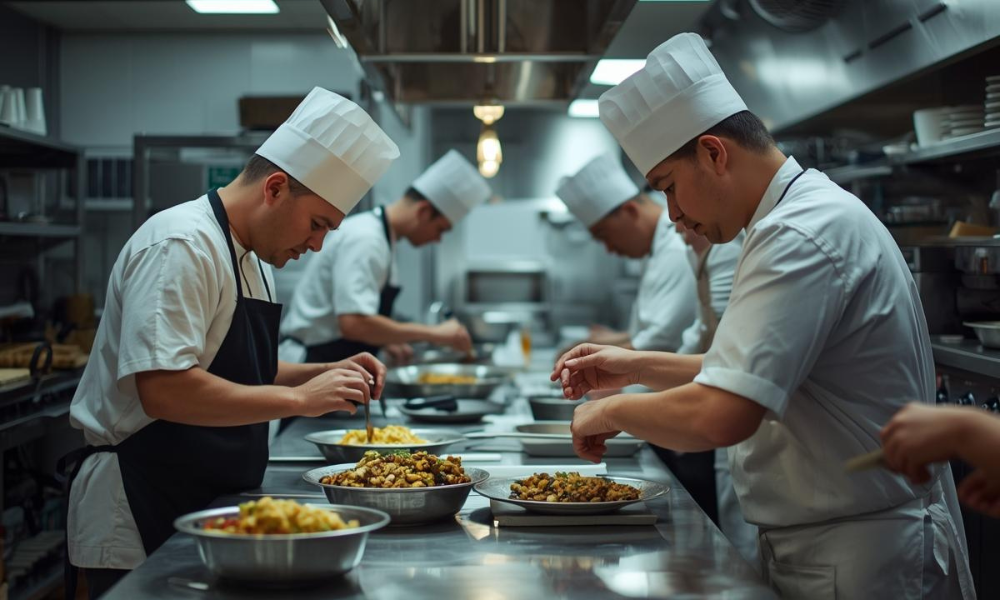
In today's fast-paced food industry, managing a central kitchen efficiently can be a daunting challenge. Operators of restaurant chains, commissary kitchens, and food manufacturers face increasing pressure to scale production while maintaining quality and minimizing waste.

One surprising industry statistic reveals that up to 30% of food prepared in bulk kitchens is wasted due to inefficient processes and lack of real-time inventory insights. This inefficiency directly impacts profitability and sustainability goals. That’s where ERP for bulk food prep becomes a game changer—a modern solution designed to optimize central kitchen production, enhance traceability, and streamline operations. In this article, we explore the operational challenges of bulk food preparation and how Codemax Smart F&B ERP is a proven ERP solution for bulk food preparation, delivering measurable efficiency, cost control, and operational improvements for F&B operators.
The Challenge: Inefficiencies in Central Kitchen Bulk Food Prep
Central kitchens face multiple pain points such as inconsistent recipe scaling, batch production tracking difficulties, unpredictable inventory management, and unmonitored wastage. For example, manual inventory records often lead to stockouts or surplus purchasing, increasing food spoilage risk. Batch inconsistencies can cause quality variation, impacting brand reputation. Furthermore, inefficient production lines create bottlenecks, increasing labor costs and reducing throughput. According to industry research, F&B inventory waste alone accounts for an average of 10-15% cost overruns in bulk food prep operations. These operational inefficiencies also introduce compliance risks and hinder scalability.
Why This Happens: Root Causes Behind Bulk Food Prep Challenges
The root causes stem from fragmented systems and outdated processes that fail to provide real-time visibility and control. Central kitchens often rely on manual record-keeping or disconnected software tools which cannot integrate data from recipe scaling, inventory, production, and supplier management. Inconsistent communication between procurement, production, and retail outlets further compounds delays and inaccuracies. Additionally, unpredictable demand patterns complicate stock ordering and production scheduling, leading to either excess waste or insufficient supply. Without automated traceability and process standardization, waste, errors, and inefficiencies become systemic.

Solutions & Best Practices for Optimizing Bulk Food Preparation
- Implement Recipe Scaling Automation: Use systems that automatically adjust ingredient quantities for batch size changes to ensure consistency and reduce overproduction.
- Enable Batch Production Tracking: Track each production run from raw material input to finished goods, monitoring yield and identifying losses immediately.
- Adopt Real-Time Inventory Traceability: Integrate inventory management with supplier data and demand forecasts to optimize stock levels and minimize spoilage.
- Automate Smart Stock Ordering: Use predictive analytics and supplier integrations to automate reorder points, ensuring stock replenishment without excess.
- Monitor and Manage Wastage: Set alerts for expiry dates and spoilage patterns, analyze wastage causes, and adjust processes accordingly.
- Streamline Production Line Workflow: Use scheduling and workflow tools to reduce bottlenecks, improve labor efficiency, and synchronize production stages.
- Ensure Seamless Retail Integration: Connect central kitchen outputs directly with retail POS systems for accurate order fulfillment and sales data feedback.
Technology’s Role: How ERP for Bulk Food Prep Transforms Central Kitchen Operations
Modern ERP systems like Codemax RMS combine production line management, inventory traceability, and order automation into a unified platform tailored for central kitchens. Codemax RMS automates recipe scaling, enabling precise batch production management that maximizes yield and maintains consistent quality. Its real-time inventory traceability tracks raw materials to finished products, reducing waste and ensuring regulatory compliance. Smart stock ordering features integrate with suppliers and leverage demand forecasting algorithms to prevent stockouts and surplus inventory. Additionally, Codemax RMS includes wastage management tools that alert operators of spoilage risks and help mitigate losses proactively. The ERP’s retail integration capability ensures that central kitchen output aligns seamlessly with outlet demand, optimizing supply chain responsiveness.
Real-World Impact: Case Studies Highlighting Codemax RMS Benefits
A prominent cloud kitchen operator leveraged Codemax RMS to automate batch production and inventory tracking across multiple sites. Within six months, they reported a 25% reduction in food wastage and a 15% improvement in production efficiency, thanks to improved yield management and real-time insights. A regional commissary kitchen integrated Codemax’s smart stock ordering to dynamically forecast demand signals from retail POS data, reducing stockouts by 30% and carrying costs by 18%. These quantified outcomes illustrate how ERP solutions tailored for bulk food prep can drive bottom-line results while promoting sustainability.

Common Mistakes to Avoid in Central Kitchen ERP Implementation
- Over-customizing the ERP system causing complexity and delays
- Neglecting staff training resulting in underutilization of features
- Failing to integrate all supply chain functions leading to data silos
- Ignoring scalability needs of future growth
- Relying solely on basic inventory tools without production tracking
Conclusion
Optimizing bulk food preparation in central kitchens demands a comprehensive approach integrating recipe scaling, inventory traceability, smart stock ordering, and wastage management. Key takeaways include:
- Automation of batch production and inventory reduces waste and cost overruns
- Real-time data drives operational efficiency and consistency
- Integrated ERP solutions improve supply chain transparency and scalability
- Codemax Smart F&B ERP empowers F&B operators with tools designed for bulk food prep challenges
As the F&B industry moves towards data-driven and sustainable production methods, adopting ERP for bulk food prep is a decisive step to stay competitive. Learn how Codemax Smart F&B ERP can help optimize your F&B operations with tailored features that enhance efficiency, traceability, and profitability.