


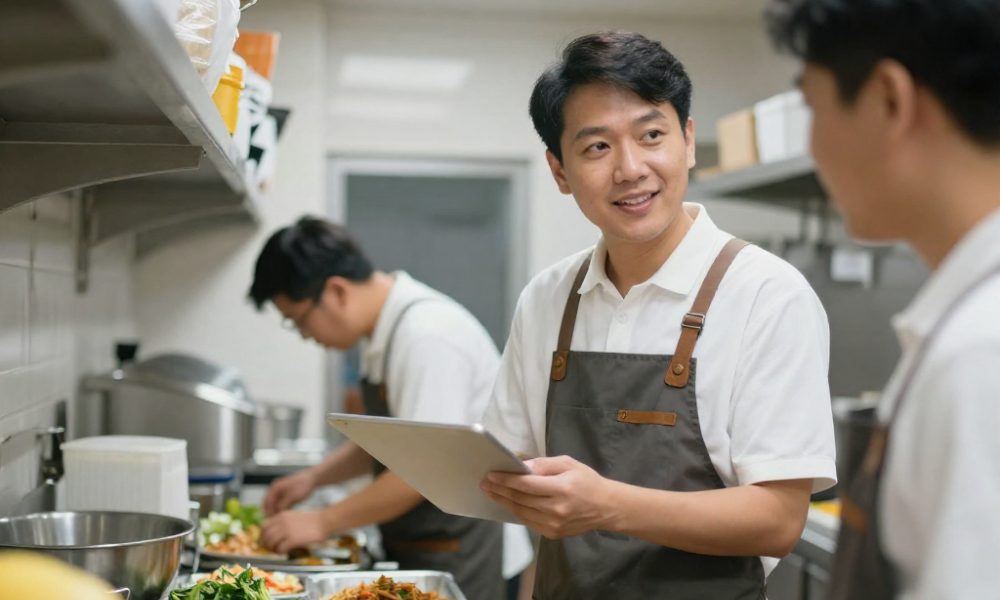
ERP for central kitchens plays a critical role in helping F&B operators manage high-volume production, inventory complexity, and food wastage across multiple outlets.
Running a central kitchen efficiently requires balancing bulk food preparation, recipe consistency, inventory control, and timely distribution. Industry studies show that food wastage in central kitchens can reach up to 30% due to poor tracking, manual processes, and lack of real-time visibility.
Without the right systems in place, these inefficiencies directly impact profitability, compliance, and sustainability goals. This article explores the key challenges faced by central kitchens and explains how ERP for central kitchens, specifically Codemax Smart F&B ERP, helps streamline operations, reduce waste, and improve overall production efficiency.
The Challenge: Inefficiencies and Waste in Central Kitchen Operations
Central kitchens operate at a scale far beyond traditional restaurant kitchens. Managing batch production for multiple outlets involves coordinating recipes, large ingredient volumes, supplier deliveries, and fluctuating demand. Without ERP for central kitchens, operators often face:
- Excess inventory leading to spoilage and food cost overruns
- Recipe scaling errors causing inconsistent quality
- Manual production tracking that creates bottlenecks
- Limited real-time visibility into stock levels
- High food waste due to missed expiry dates and poor monitoring
In many operations, up to 25–30% of prepared food is wasted, eroding margins and increasing operational stress.
Why This Happens: Root Causes in Central Kitchens
The root causes behind these challenges are structural and process-driven:
- Manual and Fragmented Processes
Spreadsheets and disconnected systems make it difficult to track inventory, batches, and production accurately. - Poor Recipe Scaling
Scaling recipes manually from test batches to bulk production often results in inconsistencies and overuse of ingredients. - Limited Inventory Traceability
Without ERP for central kitchens, it is hard to monitor ingredient usage, spoilage, and compliance requirements. - Reactive Stock Ordering
Ordering based on estimates rather than real consumption data leads to overstocking or stockouts. - Disconnected Retail and Production Systems
Lack of integration between central kitchens and outlets creates data silos and inefficient communication.
Solutions & Best Practices Using ERP for Central Kitchens
To overcome these challenges, central kitchens should adopt both operational best practices and technology-driven solutions:
- Batch Production Management
- ERP for central kitchens enables real-time batch tracking, monitoring yields, ingredient usage, and production stages to reduce losses.
- Automated Recipe Scaling and Standardization
- Central kitchen recipe software ensures accurate scaling and portion control, maintaining consistency across all outlets.
- Real-Time Inventory Management
- Track inventory from raw materials to finished goods to reduce spoilage and enable timely replenishment.
- Smart Stock Ordering
- Automated reordering based on actual consumption and demand forecasting minimizes excess inventory and shortages.
- Digital Traceability and Compliance
- Maintain audit trails, expiry monitoring, and compliance documentation through centralized dashboards.
How ERP for Central Kitchens Transforms Operations
Modern ERP platforms like Codemax Smart F&B ERP are purpose-built for central kitchen operations. By unifying inventory, production, ordering, and compliance into a single system, ERP for central kitchens delivers full operational visibility.
Key capabilities include:
- Production Line Management: Track batch production from recipe formulation to yield reporting
- Inventory Traceability: Monitor ingredient movement to reduce spoilage and ensure food safety
- Wastage Management: Receive alerts for expiry risks and spoilage patterns
- Smart Stock Ordering: Automate replenishment based on real-time demand
- Retail Integration: Sync production output with outlet POS systems for accurate fulfillment
With Codemax Smart F&B ERP, decisions are driven by real data rather than assumptions.
Real-World Impact: Central Kitchens Using Codemax Smart F&B ERP
A leading cloud kitchen operator implemented ERP for central kitchens using Codemax Smart F&B ERP and achieved:
- 20% reduction in food wastage within six months
- Improved recipe consistency through automated batch scaling
- Faster production cycles with better production visibility
- 15% savings on ingredient costs through optimized stock ordering
- Stronger compliance and traceability across operations
These measurable results highlight how ERP for central kitchens delivers both operational efficiency and sustainability benefits.

Common Mistakes to Avoid When Implementing ERP for Central Kitchens
- Choosing generic ERP systems without F&B-specific features
- Failing to integrate retail, supplier, and production systems
- Inadequate staff training leading to low system adoption
- Ignoring ERP data insights for continuous improvement
- Underestimating scalability needs as operations grow
Conclusion
ERP for central kitchens is no longer optional for F&B operators managing large-scale production. To remain competitive and profitable, central kitchens must embrace digital systems that deliver visibility, control, and efficiency.
Key takeaways include:
- ERP for central kitchens improves batch production accuracy and yield
- Real-time inventory management reduces food waste and cost overruns
- Smart stock ordering minimizes manual errors and excess inventory
- Integrated traceability supports compliance and sustainability goals
With Codemax Smart F&B ERP, central kitchens gain a scalable, F&B-focused platform to streamline operations, reduce waste, and drive long-term profitability. Learn how ERP for central kitchens powered by Codemax Smart F&B ERP can future-proof your F&B operations today.