


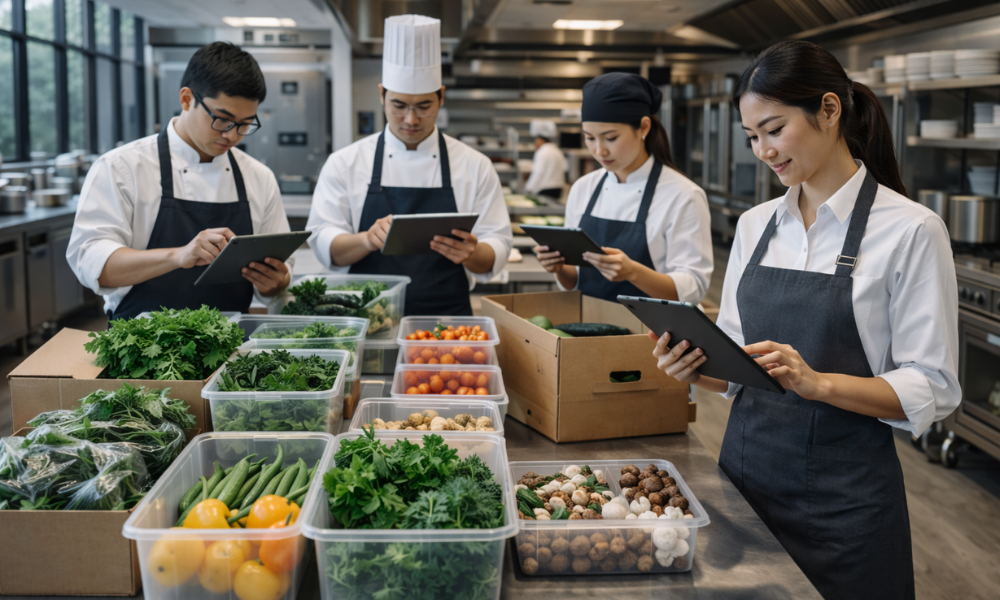
Scaling an F&B brand is an exhilarating milestone that brings immense growth opportunities along with complex operational challenges.
Central kitchens serve as the heartbeat of this expansion—producing and distributing food products efficiently to multiple outlets while maintaining consistent quality and compliance. However, scaling without the right technology infrastructure, specifically an Enterprise Resource Planning (ERP) system, can lead to bottlenecks, inefficiencies, and operational breakdowns. In particular, central kitchens that rely on manual processes or disparate systems struggle to keep pace with demand, risking costly errors and lost revenue. This article explores why central kitchens break without ERP, highlighting the crucial role of ERP for central kitchens in driving scalable success for modern F&B brands.
The Challenge: Scaling Central Kitchens Without Technology Integration
As an F&B brand expands, its central kitchen faces burgeoning complexity in managing production volumes, inventory, supplier coordination, and order fulfillment. Common pain points include:
- Inconsistent recipe execution across batches causing quality issues
- Inventory shrinkage or spoilage due to poor tracking
- Difficulty forecasting demand accurately, leading to overstock or stockouts
- Inefficient manual workflows causing bottlenecks and delays
- Lack of real-time visibility into supply chain and production status
For example, a central kitchen supplying 20 outlets must tightly coordinate batch production, ingredient sourcing, and packaging schedules. Without integrated data, kitchens rely heavily on spreadsheets, phone calls, and manual logs. This fragmented approach is prone to miscommunication and human error, impairing scalability and brand consistency.
Why This Happens: Root Causes of Central Kitchen Failures
Several underlying factors make central kitchens vulnerable without ERP systems:
- Information Silos — Data related to inventory, procurement, production, and delivery is isolated, preventing holistic decision-making.
- Manual Processes — Relying on paper or basic tools slows operations and limits agility.
- Lack of Traceability — Without end-to-end traceability, auditing quality or pinpointing wastage becomes very difficult.
- Inefficient Resource Utilization — Labor and equipment scheduling suffers without coordinated planning tools.
- Scaling Pain Points — Operational complexity grows exponentially with scale, and legacy systems cannot keep up.
For instance, without real-time inventory visibility, perishables may expire unnoticed, inflating food costs and risking compliance issues. Inaccurate production planning also leads to labor overtime or idle capacity, escalating operational expenses.
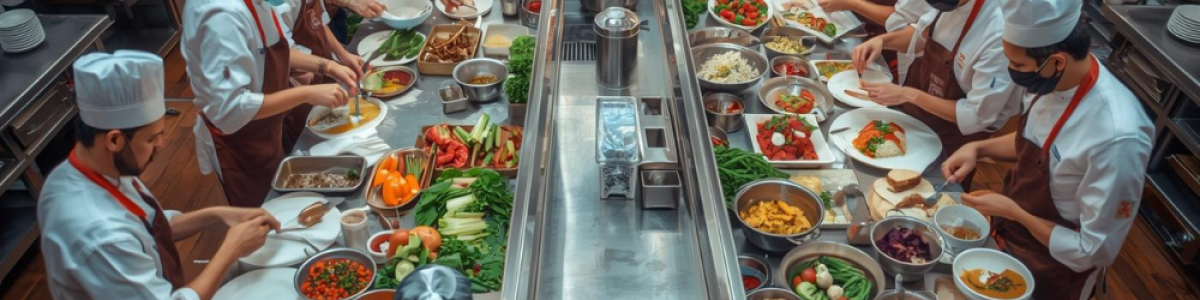
Solutions & Best Practices: How ERP Transforms Central Kitchen Operations
To overcome these challenges and scale efficiently, central kitchens should adopt robust ERP solutions designed for the food production environment. Best practices include:
- Integrated Recipe Management — ERP systems standardize recipes, automate scaling for batch production, and ensure consistent quality control.
- Real-Time Inventory Tracking — Leveraging ERP, kitchens gain end-to-end visibility of raw materials, semi-finished, and finished goods inventory to minimize waste.
- Automated Order & Demand Forecasting — ERP forecasts ingredient needs based on historical sales and production data to optimize stock levels.
- Workflow Automation & Scheduling — Centralized production schedules align labor shifts, equipment usage, and batch timings for maximal efficiency.
- Comprehensive Compliance & Traceability — ERP solutions generate audit trails, manage supplier certifications, and support HACCP requirements.
Implementing Codemax Smart F&B ERP empowers central kitchens with these capabilities, streamlining production lines and ensuring seamless coordination between suppliers and retail outlets. Its advanced recipe software and workflow modules enable operators to scale recipes accurately and monitor production progress digitally, reducing human error.
Technology’s Role: Why ERP is Non-Negotiable for Growth
Modern ERP systems are the backbone of scalable central kitchen operations. They unify critical data streams, automate routine tasks, provide actionable insights, and offer full traceability across the supply chain. Key technological benefits include:
- Real-Time Dashboard Monitoring – Central kitchens can track production efficiency, order fulfillment status, and inventory movement live.
- Data-Driven Decision Making – ERP analytics help identify bottlenecks, forecast demand shifts, and reduce waste proactively.
- Supplier & Vendor Integration – Automatic purchase order generation and delivery scheduling streamline procurement.
- Centralized Communication – ERP platforms facilitate transparent communication between kitchen teams, warehouses, and retail outlets.
For example, Codemax’s central kitchen automation platform integrates recipe scaling, inventory management, and order workflows into a single system, significantly cutting down operational delays and errors that hinder growth.
Real-World Impact: ERP Drives Measurable ROI in Central Kitchens
F&B operators implementing ERP for central kitchens consistently report transformative results such as:
- Up to 30% reduction in food waste through improved inventory and expiry tracking
- 25% faster production cycles thanks to automated workflows and batch scheduling
- Greater consistency in product quality via standardized recipe scaling and traceability
- Enhanced labor utilization and reduced overtime expenses with workforce planning tools
- Improved supplier relationships and procurement efficiency through integrated ordering
One regional cloud kitchen operator scaled from 5 outlets to 50 within two years after deploying Codemax Smart F&B ERP. The system enabled precise batch production planning and inventory synchronization, eliminating stockouts and delivering a consistent customer experience across locations.
Common Mistakes to Avoid When Scaling Central Kitchens Without ERP
- Overlooking the importance of integrated data and relying on manual spreadsheets
- Ignoring traceability and compliance requirements until a crisis occurs
- Underestimating the complexity of demand forecasting at scale
- Failing to train staff adequately on new digital tools
- Selecting generic ERP solutions not specialized for F&B production needs
Avoiding these pitfalls by investing in an ERP tailored for central kitchens is critical to sustained growth.
Conclusion
Scaling an F&B brand through central kitchens without ERP systems invites costly inefficiencies and operational risks. Key takeaways include:
- Central kitchens become bottlenecks without integrated recipe, inventory, and order management
- Manual processes and information silos lead to waste, inconsistent quality, and bottlenecks
- ERP for central kitchens automates workflows, enhances traceability, and improves forecasting
- Technology-driven kitchens achieve measurable gains in efficiency, cost savings, and scalability
The future of successful F&B scaling lies in adopting modern ERP solutions like Codemax Smart F&B ERP. Learn how Codemax can help optimize your central kitchen operations and accelerate your growth journey.